Understanding the latest income tax slabs is one of the most important parts of successful income tax filing. Every taxpayer in India must know which tax regime is beneficial before starting their income tax return filing process. For FY 2025-26 (Assessment Year 2026-27), taxpayers can choose between the new tax regime and the old tax regime based on their income, deductions, and financial goals.
In this detailed guide, we will explain the latest tax slab rates, differences between the two regimes, deductions available, and how to choose the right option for smooth online tax return submission.
What is Income Tax Filing?
Income tax filing is the process of submitting your income details, tax payments, deductions, and investments to the Income Tax Department through an Income Tax Return (ITR). Every salaried employee, freelancer, professional, and business owner whose income exceeds the prescribed limit must complete their income tax return filing within the due date.
Today, taxpayers can complete their online tax return process easily through the government portal with minimal paperwork.
Income Tax Slabs FY 2025-26 Under the New Tax Regime
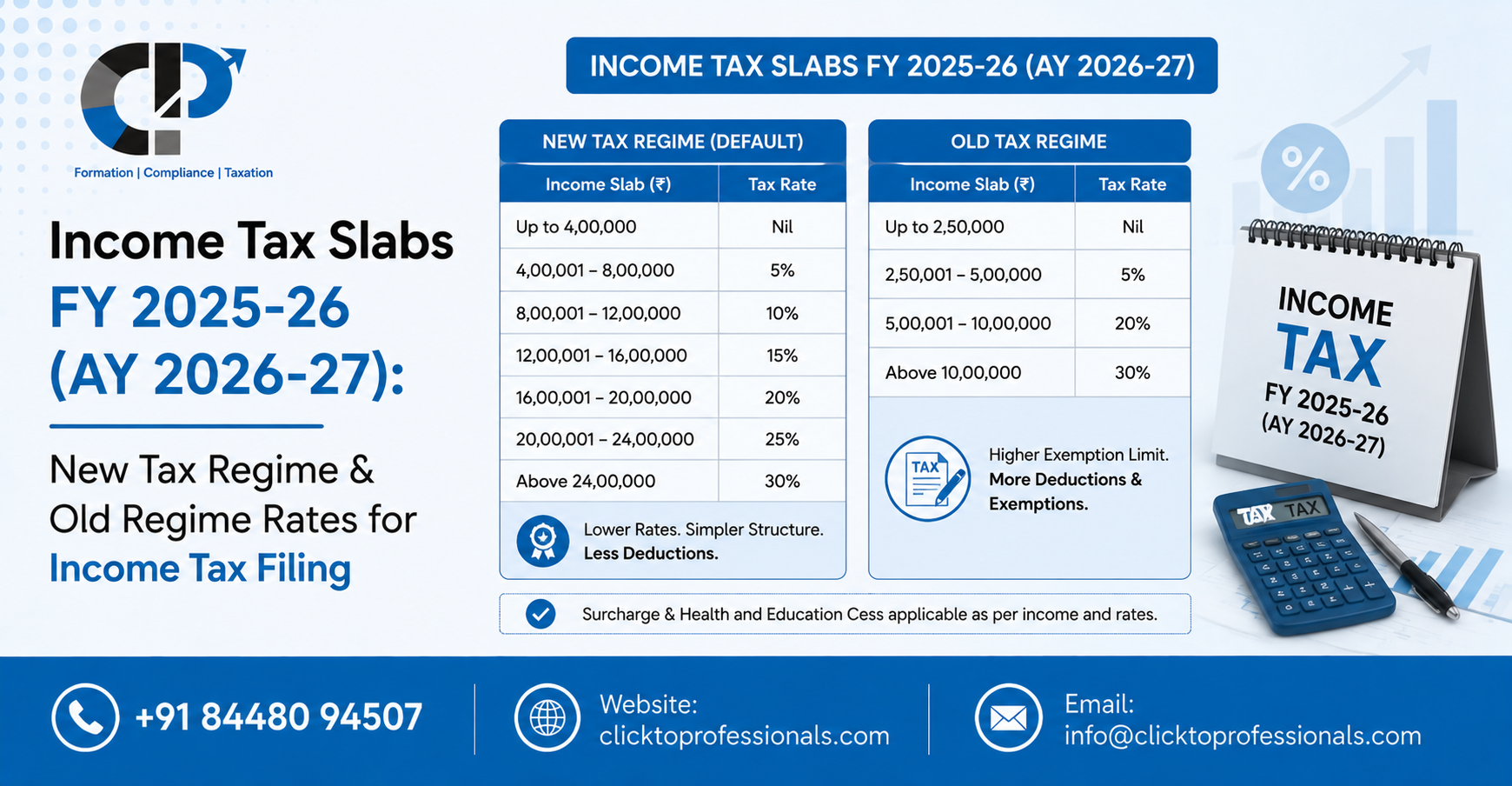
The new tax regime continues to remain the default regime for taxpayers. It offers lower tax rates but removes many deductions and exemptions available under the old regime.
New Tax Regime Tax Slabs for FY 2025-26
| Annual Income | Tax Rate |
| Up to ₹4,00,000 | Nil |
| ₹4,00,001 to ₹8,00,000 | 5% |
| ₹8,00,001 to ₹12,00,000 | 10% |
| ₹12,00,001 to ₹16,00,000 | 15% |
| ₹16,00,001 to ₹20,00,000 | 20% |
| ₹20,00,001 to ₹24,00,000 | 25% |
| Above ₹24,00,000 | 30% |
Standard Deduction in New Regime for Income Tax Return Filing
Under the new regime, salaried employees and pensioners can claim a standard deduction of ₹75,000. This helps reduce taxable income during income tax filing.
Rebate Under Section 87A
Taxpayers with taxable income up to ₹12 lakh may get rebate benefits under Section 87A, subject to applicable conditions. This makes the new regime attractive for middle-income earners planning their online tax return.
Income Tax Slabs FY 2025-26 Under the Old Tax Regime
The old tax regime follows the traditional slab structure and allows multiple deductions and exemptions. Taxpayers who invest in tax-saving instruments often prefer this regime during income tax return filing.
Old Tax Regime Slab Rates
| Annual Income | Tax Rate |
| Up to ₹2,50,000 | Nil |
| ₹2,50,001 to ₹5,00,000 | 5% |
| ₹5,00,001 to ₹10,00,000 | 20% |
| Above ₹10,00,000 | 30% |
For senior citizens and super senior citizens, higher exemption limits may apply.
Difference Between New and Old Tax Regime in Income Tax Filing
Choosing between the new and old tax regimes is an important step in income tax filing. Here is a comparison:
| Feature | New Tax Regime | Old Tax Regime |
| Tax Rates | Lower | Higher |
| Deductions | Limited | Multiple deductions allowed |
| Standard Deduction | Available | Available |
| HRA Exemption | Not Available | Available |
| Section 80C Benefits | Mostly not available | Available |
| Simplicity | Easy | Slightly complex |
| Suitable For | Non-investors | Investors and salaried employees |
Deductions Available Under Old Tax Regime for Income Tax Return Filing
One major advantage of the old regime is the availability of deductions. These deductions help reduce taxable income and lower overall tax liability.
Section 80C Deduction in Online Tax Return
Taxpayers can claim up to ₹1.5 lakh under Section 80C for investments such as:
- PPF
- ELSS Mutual Funds
- Life Insurance Premium
- EPF
- NSC
- Tax-saving FD
Section 80D Health Insurance Deduction
Health insurance premiums paid for self and family can be claimed during income tax filing under Section 80D.
Home Loan Benefits During Income Tax Filing
Under the old regime, taxpayers can claim:
- Interest deduction under Section 24
- Principal repayment under Section 80C
This is especially beneficial for homeowners completing income tax return filing.
Which Tax Regime is Better for Income Tax Filing?
The answer depends on your income structure and investments.
Choose the New Tax Regime If
- You do not claim many deductions
- You prefer a simple online tax return process
- Your salary structure has fewer exemptions
- You want lower slab rates
Choose the Old Tax Regime If
- You invest heavily in tax-saving schemes
- You claim HRA, LTA, and home loan benefits
- You pay insurance premiums
- You want maximum deductions during income tax return filing
How to Select Tax Regime During Online Tax Return Filing
Taxpayers can choose their preferred regime while filing ITR online.
Steps for Income Tax Filing Online
Step 1 – Collect Required Documents
Keep the following documents ready:
- PAN Card
- Aadhaar Card
- Form 16
- Bank statements
- Investment proofs
- TDS certificates
Step 2 – Login to the Income Tax Portal
Visit the official income tax portal and login using PAN credentials.
Step 3 – Select Correct ITR Form
Choose the correct ITR form based on your income source.
Step 4 – Choose Tax Regime
During income tax filing, select either the new regime or old regime.
Step 5 – Verify and Submit Online Tax Return
Verify the details carefully before submitting your return electronically.
Benefits of Early Income Tax Return Filing
Filing your ITR early offers several advantages.
Faster Refund Processing
Early income tax return filing helps taxpayers receive refunds quickly.
Easier Loan Approval
Banks often ask for ITR documents during loan processing.
Avoid Penalties and Notices
Timely income tax filing helps avoid late filing fees and notices from the Income Tax Department.
Carry Forward Losses
Business and capital losses can be carried forward only if returns are filed within the due date.
Common Mistakes to Avoid During Income Tax Filing
Many taxpayers make avoidable mistakes while filing returns online.
Choosing the Wrong Tax Regime
Always compare tax liability under both regimes before final submission.
Incorrect Bank Details in Online Tax Return
Wrong account details can delay refunds.
Ignoring AIS and Form 26AS
Mismatch in income reporting may lead to notices.
Missing Deduction Claims
Taxpayers under the old regime should properly claim eligible deductions during income tax return filing.
Important Due Dates for FY 2025-26 Income Tax Filing
Here are some commonly expected due dates:
| Category | Expected Due Date |
| Individual Taxpayers | 31 July 2026 |
| Audit Cases | 31 October 2026 |
| Revised Return | 31 December 2026 |
Taxpayers should complete their online tax return process before deadlines to avoid penalties.
Conclusion
Understanding the latest tax slabs is essential for smart income tax filing in FY 2025-26 (AY 2026-27). Both the new and old tax regimes have their own benefits. The new regime offers lower tax rates and simplicity, while the old regime provides multiple deductions and exemptions.
Before starting your income tax return filing, calculate your tax liability under both options and choose the regime that gives maximum savings. Proper planning, accurate documentation, and timely online tax return submission can help you avoid penalties and manage your taxes efficiently.
Whether you are a salaried employee, freelancer, or business owner, staying updated with the latest tax slab rates will make your income tax filing process smooth and stress-free.